Electromagnetic Compatibility and Splash Water Test
box Ventilator Passes Two Critical Tests
Electromagnetic compatibility (EMC) and ingress protection (IP) are prerequisites for regulatory approval and safe clinical operation — not optional quality markers. The box ventilator by IMT Innovations has passed both test categories at the first attempt.
Electromagnetic Compatibility (EMC)
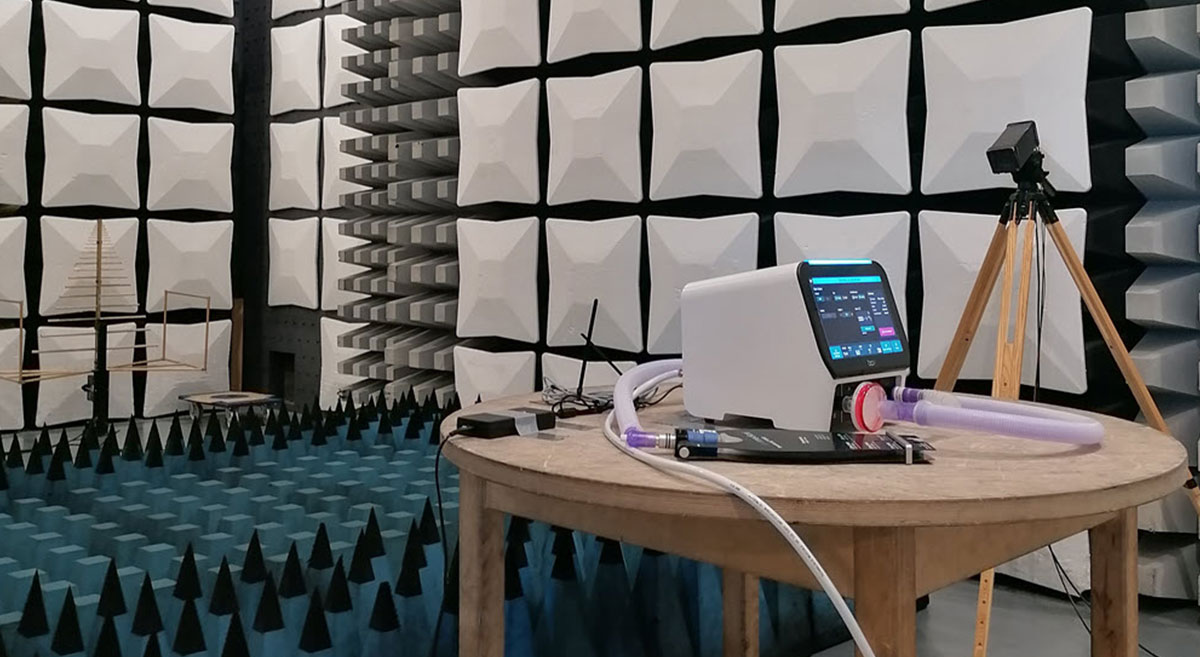
EMC testing verifies that a device neither disrupts other equipment through its own emissions nor malfunctions when exposed to external electromagnetic interference. In clinical environments, where ventilators operate alongside devices communicating via Bluetooth, Wi-Fi, or RFID, this is a patient safety requirement.
A ventilator with insufficient immunity may fail to alarm or interrupt ventilation if disturbed by a nearby device. EMC Requirements are addressed in IEC 60601-1-2 and demonstrates compliance with applicable requirements of MDR.
Ingress Protection (IP) — Splash Water Resistance
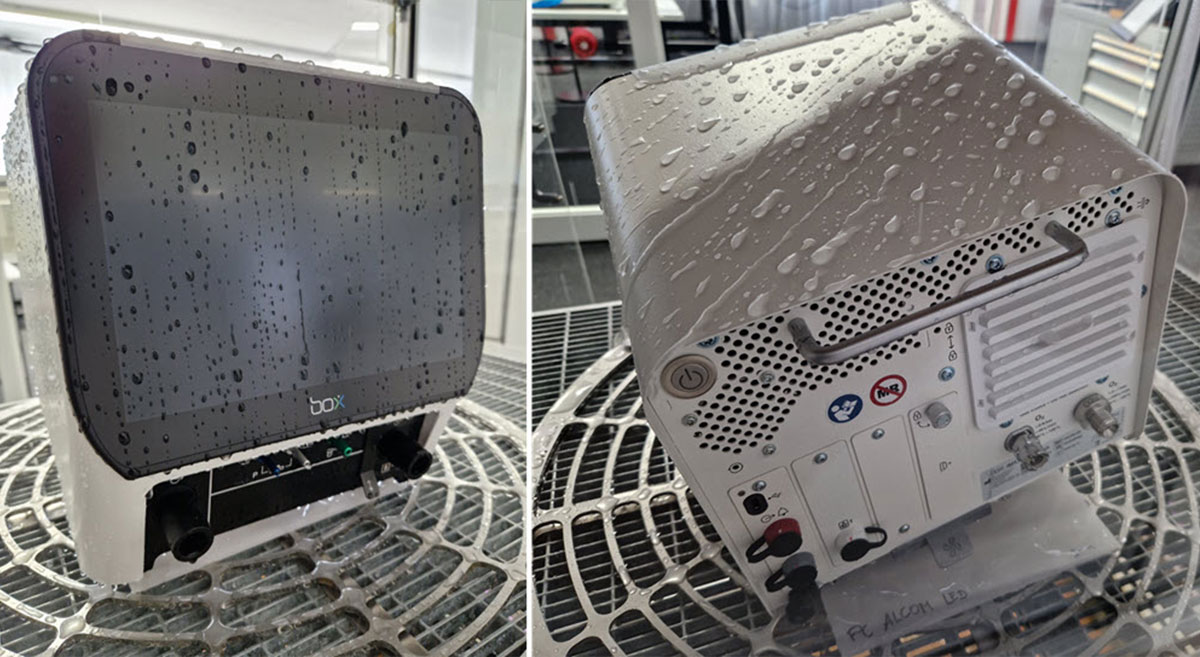
The box ventilator is designed for IPX1 and IPX2 protection rating in accordance with IEC 60529. IP testing, defined under IEC 60529 verifies that a device is protected against liquid ingress. For the box, the relevant ratings are IPX1 and IPX2 — which means a certain degree of protection provided by the box enclosure against ingress of water.
In clinical use, ventilators are routinely exposed to cleaning agents, condensation, and accidental spills. Insufficient enclosure protection may increase the risk of electrical malfunction. These requirements are anchored in IEC 60601-1, the general safety standard for medical electrical equipment.
What the First-Time Passes Mean for Licensees
Passing both tests at the first attempt avoids costly redesign cycles and repeat testing, reduces time to market, and demonstrates that the platform meets the international standards required for multi-market authorisation.